squardtech

What an IT career will look like in 5 years

www.squardtech.com

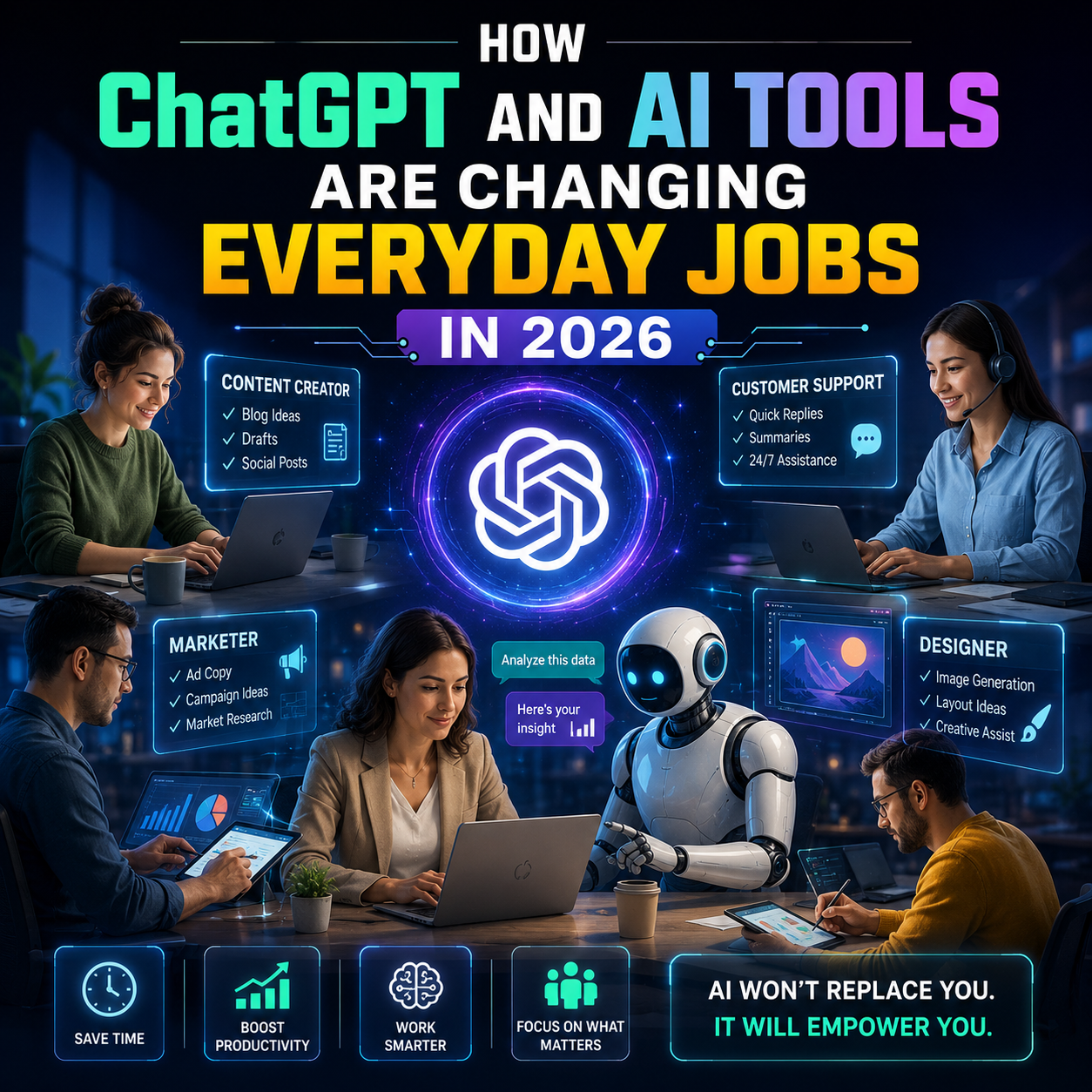
What an IT career will look like in 5 years By 2028, IT professionals will be able to collaborate with colleagues equipped with AI. Teams will no longer need to be physically present but will have fully embraced this notion of hybrid work and will be able to better evolve from one company to another, thanks to key skills, IT market analysts say.. While crystal ball technology is notoriously fallible, IT experts say there are a handful of changes to IT work we’re likely to see in half a decade. They predict IT workers will work in more task-oriented environments than job-oriented ones, relying even more heavily on automation and AI, and using increasingly portable yet powerful tools. At the same time, AI-powered automation in particular will require a human touch to scrutinise processes and outcomes, creating a greater need for soft skills in IT ranks than ever before. Here’s a look at how IT teams will operate and collaborate across the enterprise in the near future. Automation attacks productivity Driven by advances in AI, IT work will become increasingly automated over the next five years, according to those at the forefront of these changes. In addition to general workplace improvements, automation will play a critical role in all areas of IT, including software development, by streamlining IT processes and increasing IT productivity. “IT leaders have led their organisations through immense workplace changes over the past three years, and it will only get more complex in five years,” says Saket Srivastava, CIO of Asana. “Companies are facing a shortage of resources and skilled profiles, so we need automation to be our ally to automate mundane, repetitive, and low-value tasks so our talent can work on more impactful projects.” According to Srivastava, companies will automate low-skilled tasks to reduce mental load and save time. “Think about how you can implement advanced data science models to understand customer pain points and improve service,” he says. Jim Flanagan, CIO of Hanscom Federal Credit Union, predicts that natural language processing (NLP) will work in tandem with automation to enhance the technology IT teams will soon rely on. “NLP is able to discern intent, context, and ambiguity in written text or speech,” Flanagan says. “Our calendars will automatically schedule our workday based on variables like deadlines and estimated time frames, and our inboxes will automatically group emails by priority, taking into account the sentiment of the sender’s message, ensuring the most important emails receive the quickest attention, at our convenience.” AI-driven “do not disturb” features will prevent us from receiving emails when we need to focus, and this technology will help us compose responses faster, often with minimal effort on our part.” AI increases the value of computer work. Like many other industry experts, Mike Hendrickson, vice president of technology products and development at Skillsoft, sees a bright future for AI in the IT workplace. But for Mike Hendrickson, the future of AI in IT will involve collaboration between IT staff and AI technologies. And as more and more tasks are handled by AI, basic human skills will be more important than ever, especially when it comes to troubleshooting automated processes. Kim Huffman, CIO of TripActions, agrees. AI will reduce the number of repeat internal support requests that require human intervention, freeing up IT support employees for more personal interactions. “We will see the use of AI increase in software development and testing functions, shifting the role of these employees to higher-level, more personal tasks,” says Kim Huffman. Mike Bechtel, chief futurist at Deloitte Consulting, warns that adopting AI to improve IT operations and employee productivity will require a new level of trust in the technology. “The experience of an augmented workforce—in terms of recruiting, productivity, learning, and more—will certainly be one to watch, as the level of trust we place in our AI colleagues could be surprising,” says Bechtel. “Having confidence that AI is providing the right analytics and insights will be paramount. To build trust, AI algorithms must be visible, verifiable, and explainable, and employees must be involved in the design and production of AI. Organizations are realizing that competitive gains will be easier to achieve when trust in this technology is established.” Additionally, the increased reliance on AI for IT support and development work, such as entry-level coding, as well as cloud and systems administration, will put pressure on IT professionals to upskill in more challenging areas, says Michael Gibbs, CEO and founder of Go Cloud Careers. “With artificial intelligence replacing hands-on technical work, IT workers need to improve their business acumen, leadership abilities, communication skills, emotional intelligence, and architectural skills,” says Michael Gibbs. “The world will need more people with deep architectural experience to better connect new technologies to maximize business performance.” Skill-based teamwork and dynamic sourcing Speaking of skills, there’s a focus on business and deeper technical know-how. These points will be associated with a shift in organisations that, in the coming years, will seek flexibility by prioritising skills over jobs, according to a Deloitte study. Deloitte’s Bechtel cites the example of Mercedes-Benz, which he says has “organised some of its IT profiles into ‘capability sets’ to improve the flexibility of assigning staff to new roles or new products.” And Mike Bechtel says the results speak for themselves: “Competency-based companies have a greater than 100% chance of placing talent effectively and a 98% chance of retaining top performers.” IT professionals who tend to change jobs every few years may, in fact, be exactly what future companies are looking for, and we could see a shift in how they think about long-term careers, he says. “Companies that are ahead of the curve are already using talent outsourcing, through temporary workers or contractors, to fill gaps and free up their internal resources so they can focus on the most challenging and interesting tasks, and we expect more and more organisations to adopt this approach, much to the delight of these bored IT professionals,” says Mike Bechtel. Teleworking in force The pandemic … Read more

Which IT jobs promise the highest salaries in 2026

Which IT jobs promise the highest salaries in 2026 The IT industry has been one of the most dynamic and fastest-growing sectors in the labour market for years – and this trend will continue unabated in 2026. Digital transformation, increasing automation, and new technological developments such as artificial intelligence, cloud computing, and cybersecurity are ensuring consistently high demand for qualified IT professionals. At the same time, the skills shortage is intensifying, making companies willing to pay attractive salaries to attract and retain talent. But which IT professions will actually be among the highest-paying in 2026? This article provides a comprehensive overview of the industry’s top jobs, analyses average salaries in various roles, and highlights which qualifications and specialisations are particularly in demand. It thus offers both career starters and experienced IT professionals guidance for career planning. Overview: Average salaries in IT 2026 The IT industry will continue to be one of the best-paid professions in Germany in 2026. According to current surveys, the average gross annual salary for IT specialists is around $58,315, with a medium-term trend that will continue to rise. However, salary levels vary considerably depending on specialization, professional experience, company size, industry, and location. A key factor is the location of work: In federal states such as Hamburg, Baden-Württemberg, and Hesse, IT professionals earn significantly more on average than in Saxony or Mecklenburg-Western Pomerania, for example. This is due both to the economic strength of these regions and the demand for qualified IT specialists there. The type of employer also plays a major role. Larger companies with more than 1,000 employees pay higher salaries on average than small startups or medium-sized companies. IT specialists earn particularly well in industries such as automotive and mechanical engineering, where average salaries exceed $67,410. In addition to their base salary, many IT specialists also benefit from attractive additional benefits such as flexible working hours, home office options, company cars, and bonus payments. Overall, it’s clear that anyone working in the IT industry can expect excellent earning potential in 2026 – provided they have the right qualifications and specialisation. Differences by subject area Salaries in the IT industry in 2026 will vary significantly depending on the field, specialisation, and level of responsibility. Specialists in information technology (average $70,038) and business informatics (average $64,759) earn particularly well, as these fields are often strategically oriented and require both technical know-how and business acumen. Traditional computer science graduates are in the middle range, averaging $59,456, although the actual salary depends heavily on the specific role. Average salaries are somewhat lower in information technology ($58,098) and in the international information technology sector ($60,922). Salaries are significantly lower in operational or technical-crafts-based areas such as system administration ($51,978) or IT systems electronics technicians ($51,360). These differences can be explained primarily by the degree of specialisation, proximity to corporate strategy, and the training path: Academic disciplines generally offer better salary prospects than purely practice-oriented apprenticeships. Top 10 highest-paying IT jobs in 2026 Here they are, finally, the top 10 best-paid IT jobs in 2026 according to the statistics: 1st place: Software architect – > $131,600 ( ₹1.1 crore ) Software architects design the basic structure of complex software systems and establish technological standards. They act as an interface between developers, project managers, and stakeholders, ensuring that software solutions remain scalable, maintainable, and efficient. Their expertise in system design, programming languages, and frameworks makes them key players in large development projects—and their salaries are correspondingly high. 2nd place: Cloud Architect – >$82,710 ( (INR): ₹7,331,070 ) Cloud architects develop and manage cloud infrastructures, for example, on platforms such as AWS, Azure, or Google Cloud. They design secure, high-performance, and scalable cloud environments and support companies in the transition from on-premises systems to the cloud. Due to the increasing migration of IT systems to the cloud, they are in high demand and are accordingly well paid. 3rd place: Data Engineer – >(USD): $82,710 ( (USD): $82,710 ) Data engineers lay the technical foundation for data-driven decisions: They develop data pipelines, manage databases, and ensure that vast amounts of data are efficiently stored, processed, and made accessible. Their work forms the foundation for data scientists and business analysts. Due to their central role in data-driven companies, their salaries are steadily rising. 4th place: Database developer – >(USD): $71,680 ( (INR): ₹6,030,000 ) Database developers design, implement, and optimize database systems that are essential for the functioning of modern applications. They work closely with software developers to ensure that data can be stored and retrieved securely, quickly, and reliably. Their expertise is especially indispensable in companies with large amounts of data. 5th place: Hardware developer – >(USD): $70,560 ( (INR): ₹5,940,000 ) Hardware developers are responsible for the development and optimization of electronic circuits, microprocessors, and other hardware components. They often work in the automotive industry, mechanical engineering, or medical technology manufacturing. Their work requires precise technical know-how and combines electrical engineering with computer science, which is also reflected in their salary. 6th place: IT Security Specialist – >$68,480 ( ₹5,760,000 ) IT security specialists ensure the security of networks, applications, and data. They identify vulnerabilities, implement protective measures, and respond to security incidents. Due to the increasing threat landscape in cyberspace, they are among the most sought-after IT specialists – especially in critical infrastructures and regulated industries. 7th place: Data Scientist – >$65,270 ( ₹5,490,000 ) Data scientists analyse complex data sets, develop machine learning models, and gain valuable insights from large amounts of data. They work across disciplines, including IT, statistics, and business – often using tools like Python, R, or TensorFlow. Their analytical skills are essential for data-driven business decisions, which translates into attractive salaries. 8th place: DevOps Egnineer – >$63,130 ( ₹8,100,000  ) DevOps engineers connect software development (Dev) with IT operations (Ops). They automate processes such as testing, deployment, and monitoring to increase the efficiency and stability of software projects. In agile companies, they are crucial for continuous delivery (CI/CD) and high product quality, and are … Read more